


Schedule
Garden Tour & Education . . . . . . Sep 12, 2026 10:00 – 11:30 AM
Weeding & Maintenance . . . . . . . Mondays at 6:30 PM
We will NOT be meeting on Labor Day, Sep 7
Harvesting day . . . . . . . . . . . . . . . 2027 Stay tuned!
Check back soon for future dates!
For event details, email us at vhgreenteam@gmail.com
Table of Contents

Mission Statement
Our native plant food forest exists to build a healthier, more connected community by restoring resilient ecosystems and modeling sustainable landscape practices. We strive to provide educational opportunities for all ages, empowering people to care for the land while enjoying the benefits of a shared, abundant space.
If you would like to get involved in the Vadnais Heights Community Food Forest, contact us!
What is a Food Forest?
A food forest is based on an agricultural practice of mimicking the structure of a natural forest, with a canopy of fruit and nut trees, an understory of fruit-bearing shrubs, a herbaceous layer of herbs and other edibles, and finally ground covers and root edibles. This layering of species creates the biodiversity needed to ensure resilience against pests and disease, while building soil fertility and supporting wildlife including pollinators, birds and beneficial insects. Applying permaculture principles creates a self-sustaining garden requiring less maintenance than traditional gardens.
The food forest not only provides a supply of nutritious food, it offers and encourages community engagement with nature and each other, learning about healthy soil practices without chemicals and contributes to the overall health of our ecosystem.

What Makes our Food Forest Special?
We designed our food forest to be composed of only native plants (i.e. plants native to our region in Minnesota). Providing sources of native plants is important because these plants have developed a survival relationship with our native insects, birds and wildlife over thousands of years. These plants provide wildlife with the exact habitat and nutrients they need, when they need it, to survive and thrive. In return, wildlife pollinates, spreads seeds, and fertilizes next year’s plant growth.
Native plants and wildlife give us humans many gifts too; they give us food, medicine and beauty, they pollinate our food crops, clean our air, store carbon, clean our water, and sing for us (song birds!) We can reciprocate this by learning their names, providing space for them to grow, and caring for them. We invite you to join us on this great adventure!
If you’re interested in getting involved in the Vadnais Heights community Native Plant Food Forest contact us! Check out the resources below to learn how you could establish a Native Plant Food Forest in your own yard!
Why Native Plants?
The world is in a biodiversity crisis:
- 40% of global insect species are in decline (Journal of Biological Conservation)
- 30% of North American bird species are in decline (Journal of Science)
The decline of insect and bird species are related—take away their habitat and food supply and they can’t survive. Human activity such as habitat clearing, construction, light pollution, etc. has contributed to a sharp decline of natural habitat and native food, reducing the numbers and species of our partners (insects, birds, wildlife) drastically over that last 50 years.
We lose 13 million hectares of forest globally every year (the size of Greece) (United Nations Biodiversity Summit).
How can we combat habitat loss? Build Habitats!
- Plant native plants (including trees and shrubs)
- Clean up local waterways
- Remove invasive species
How Do I Build a Minnesota Native Plant Food Forest in my Garden?
There are many ways to build a garden! Look through the slideshows below to see how we built our food forest.
Our focus was on:
preserving the natural soil microbiome,
keeping critters and pests out,
maintaining organic plants intended for consumption,
and setting the plants up for success!
Preparation
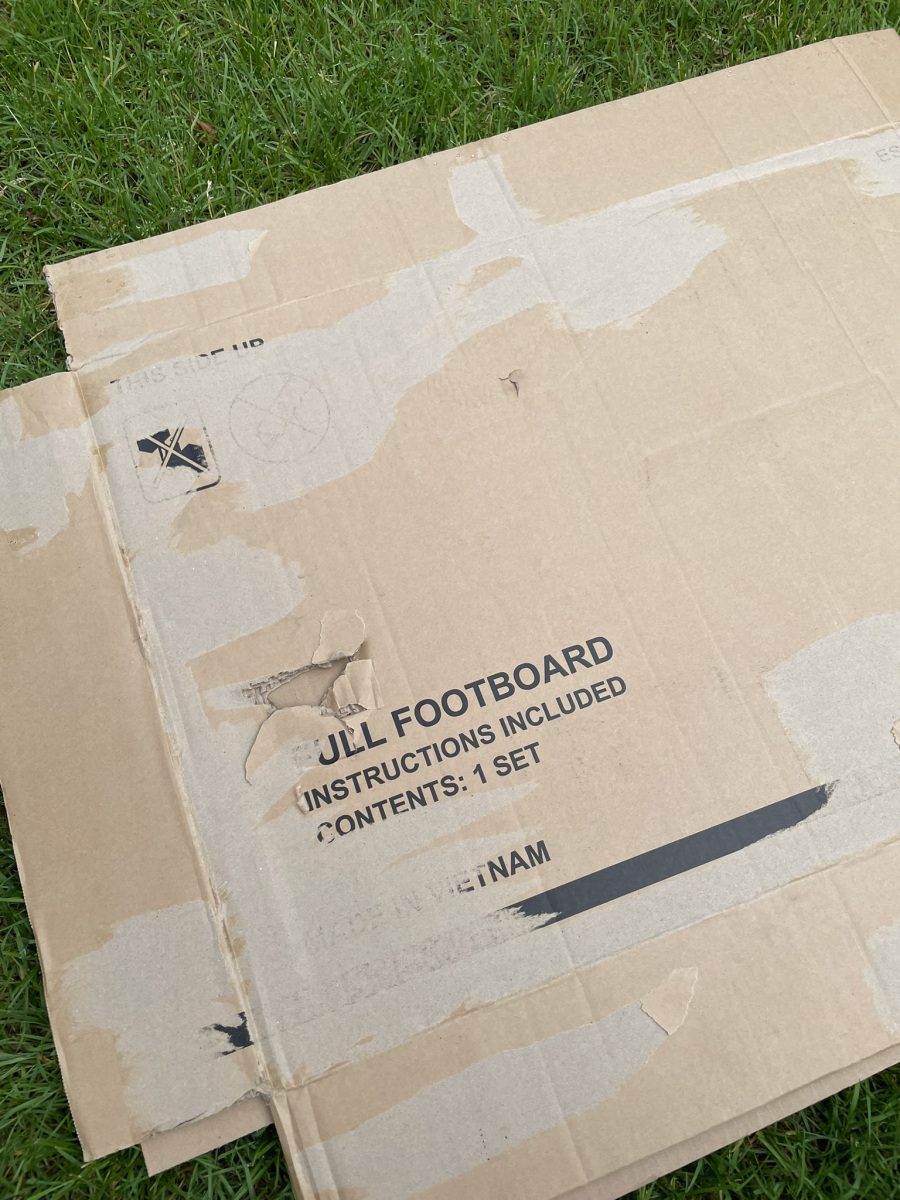
- Remove all tape and labels from cardboard to keep plastic out of the garden.
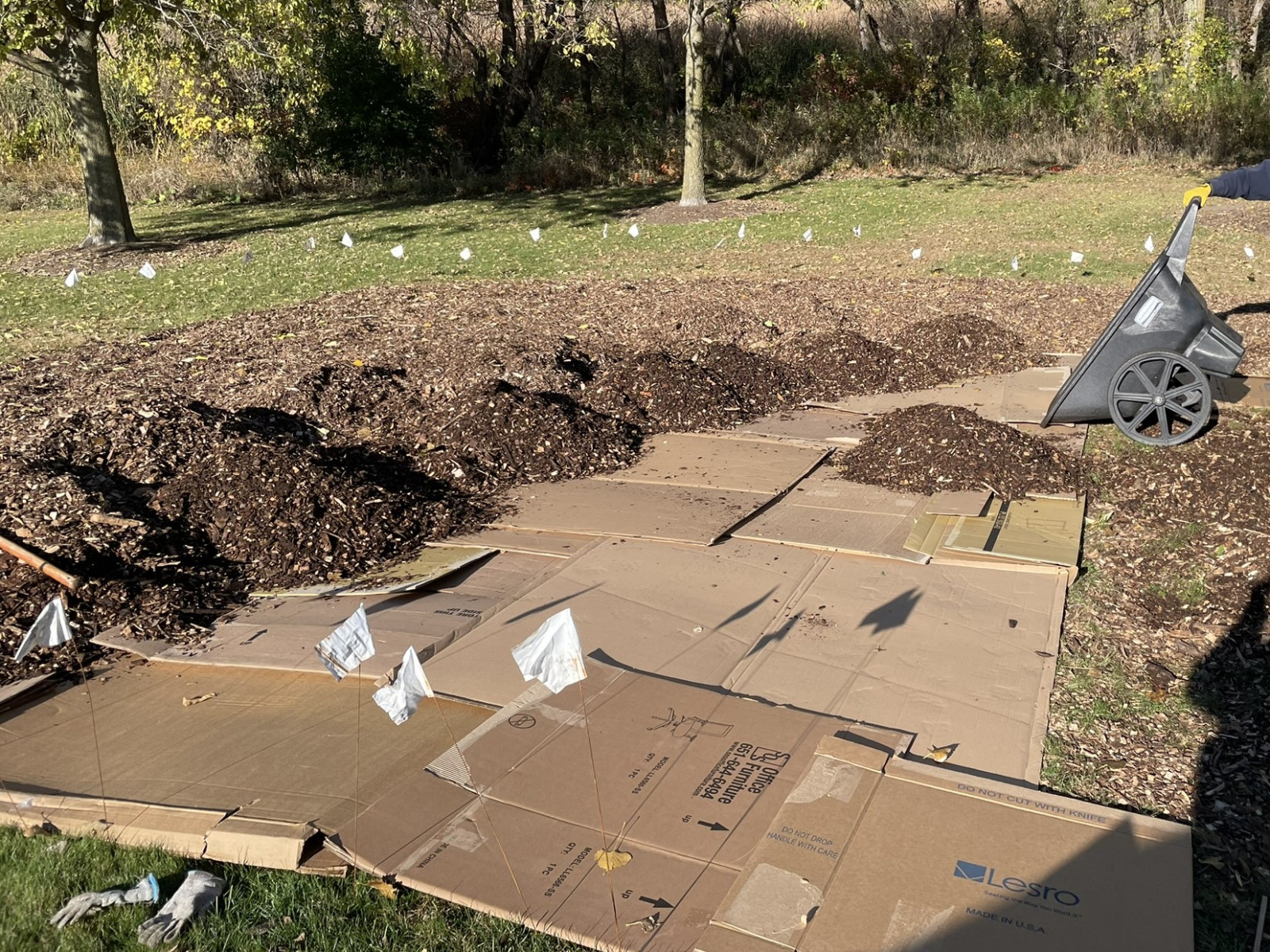
- In the fall, lay down 1-2 layers of cardboard and 4-6 inches of mulch to smother the grass.
Fence Posts
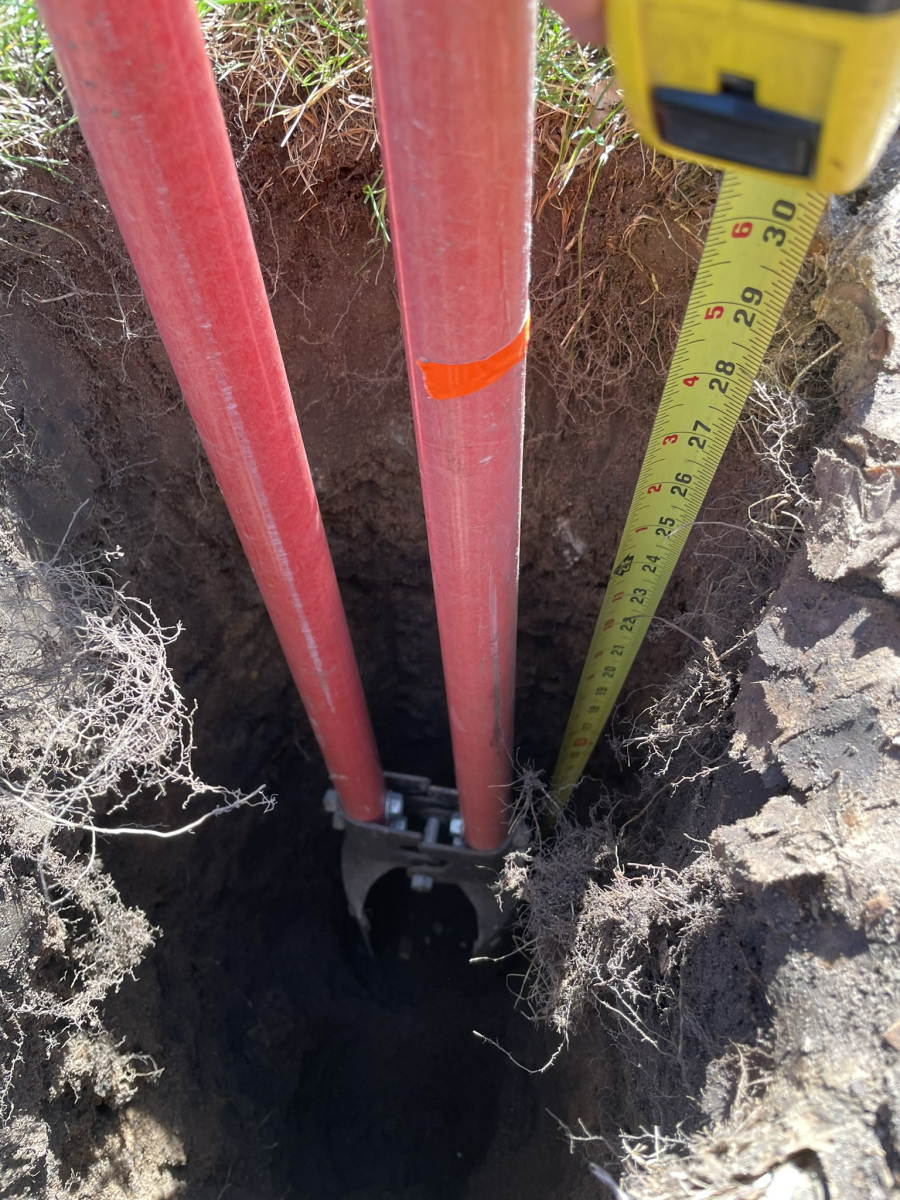
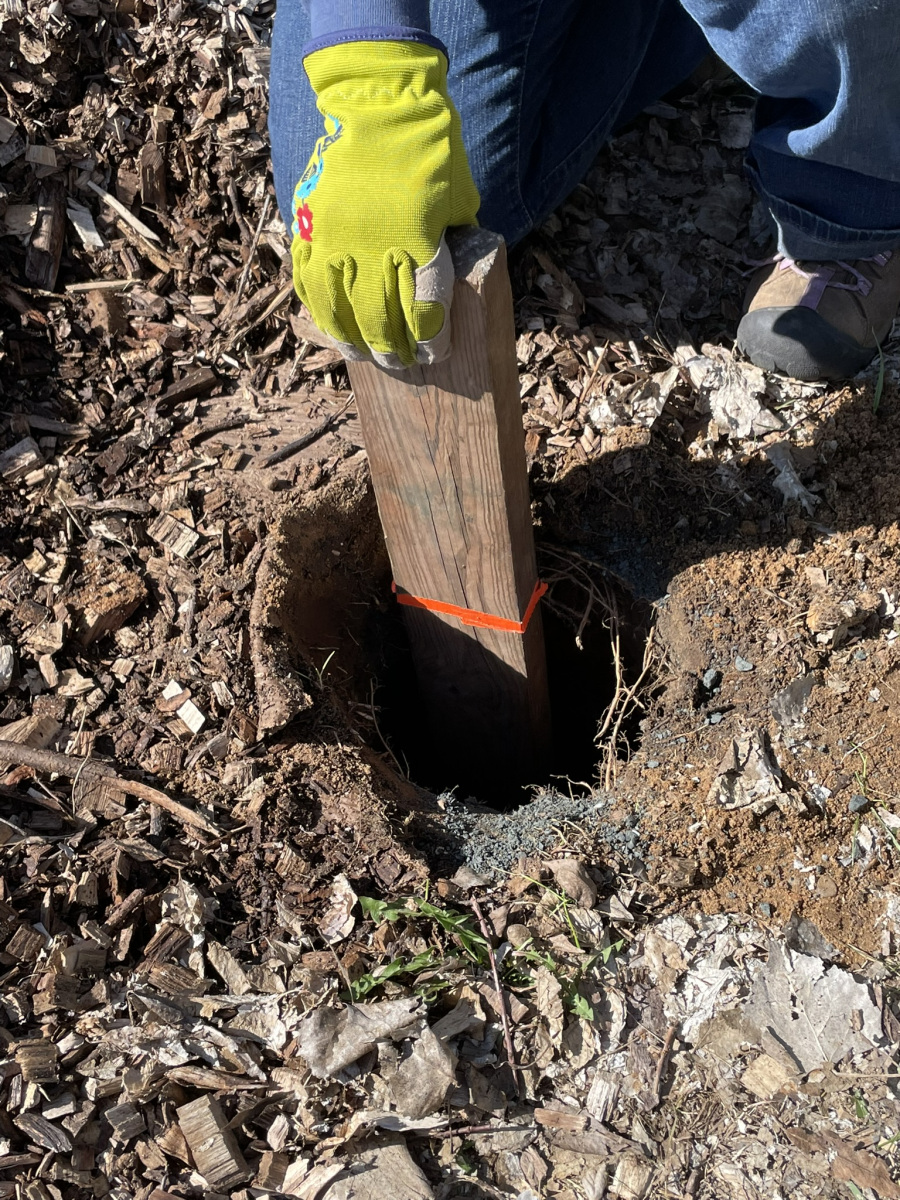
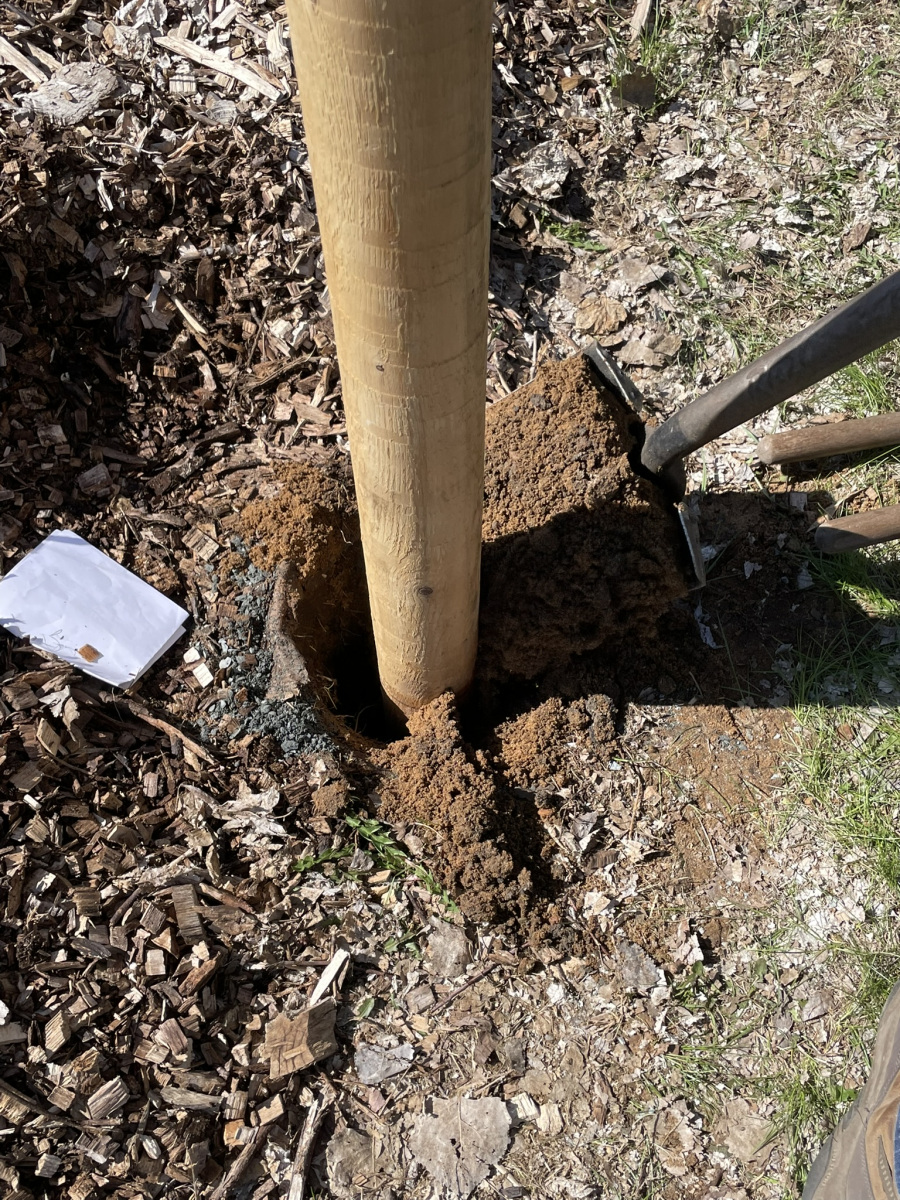
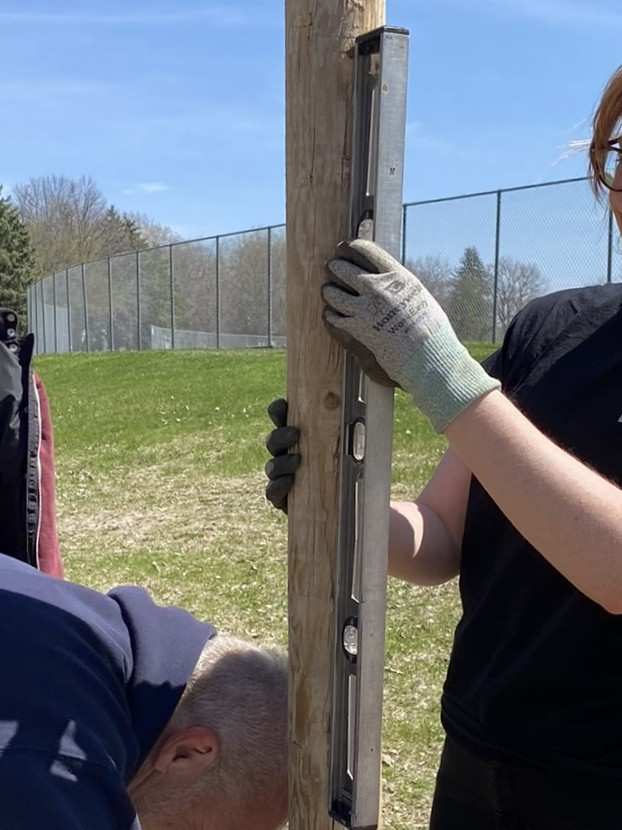
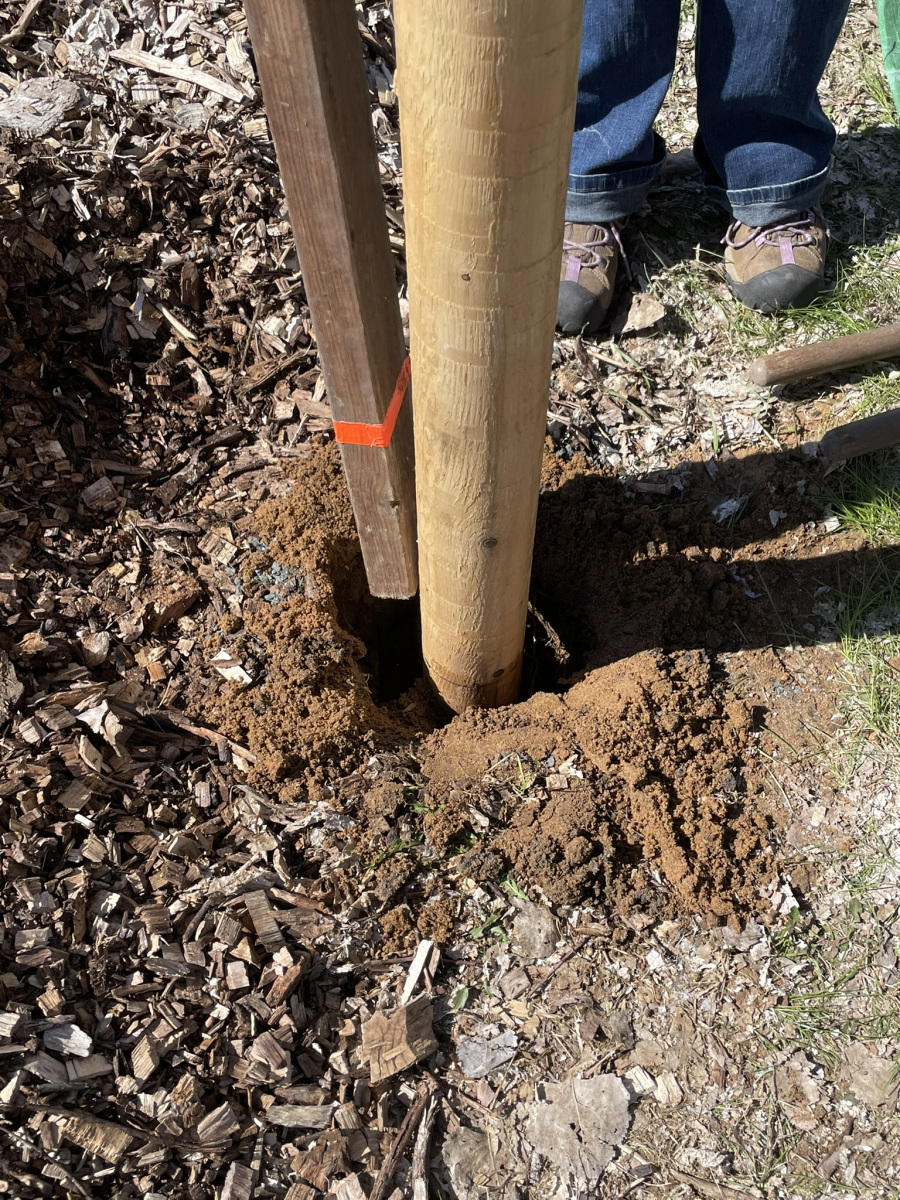
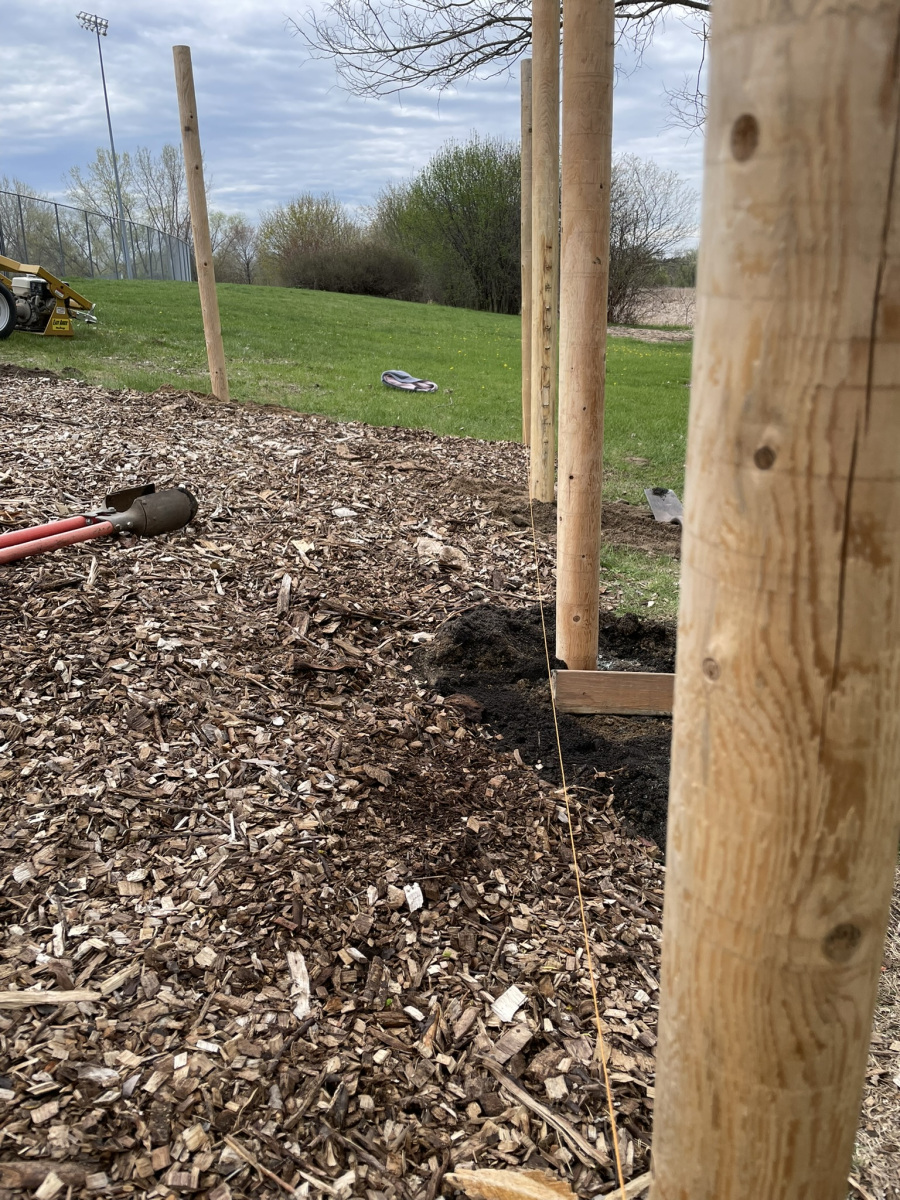
- Dig about 2.5-foot holes.
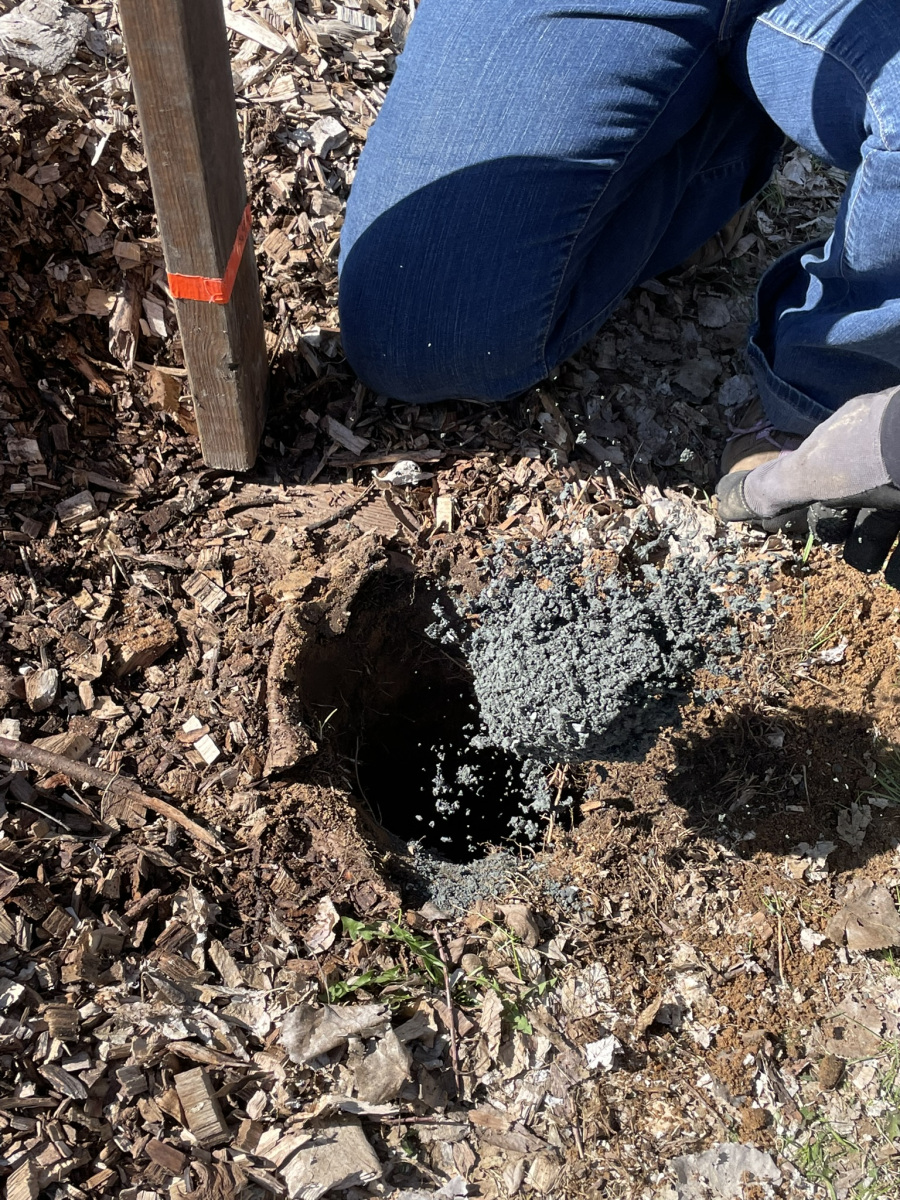
- Tamp down a couple inches of rock.
- Place the post. (We used 4″ cedar.) Add concrete to corner-posts and gate posts, level the posts and fill with dirt.
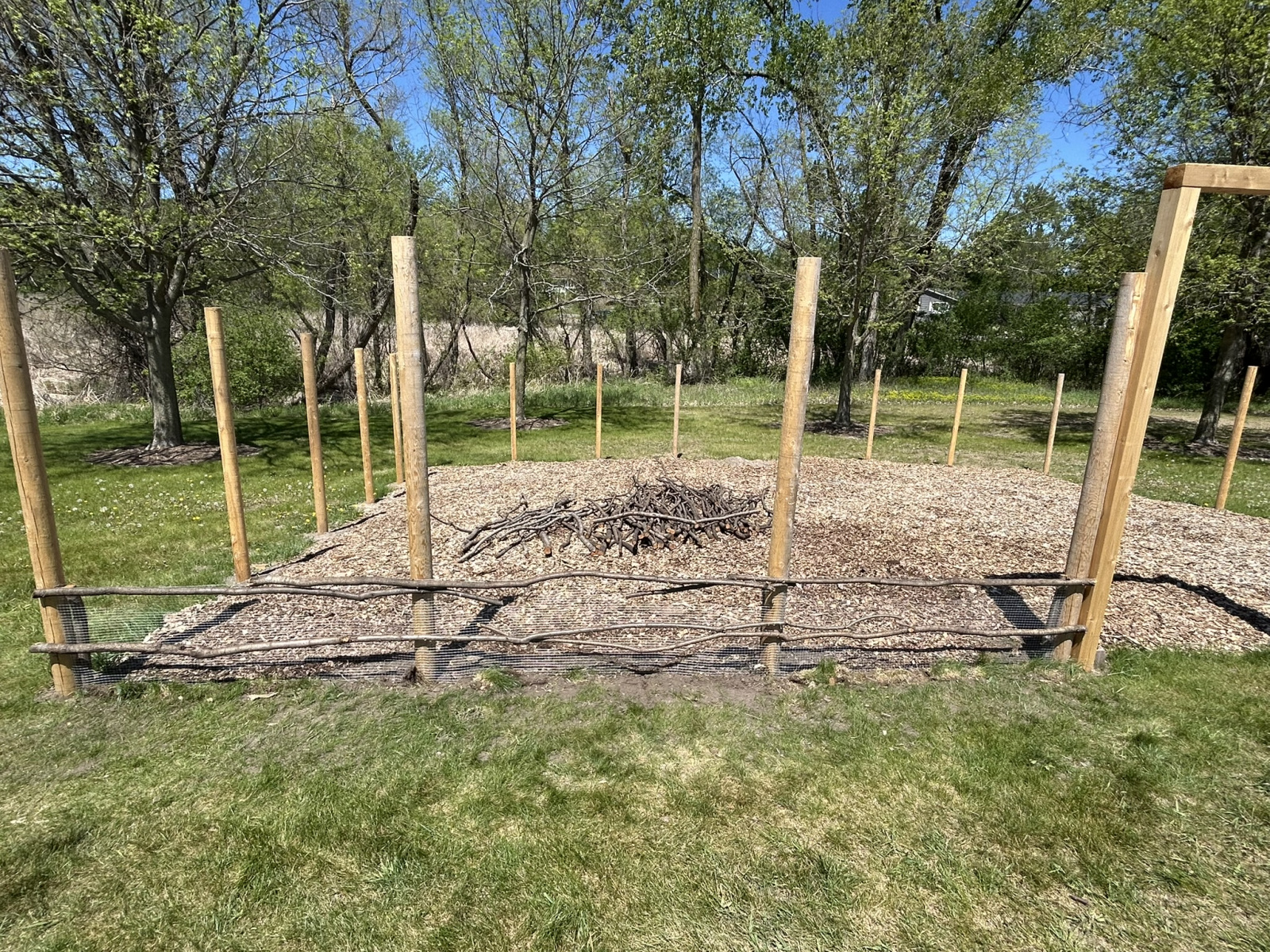
Install Fencing
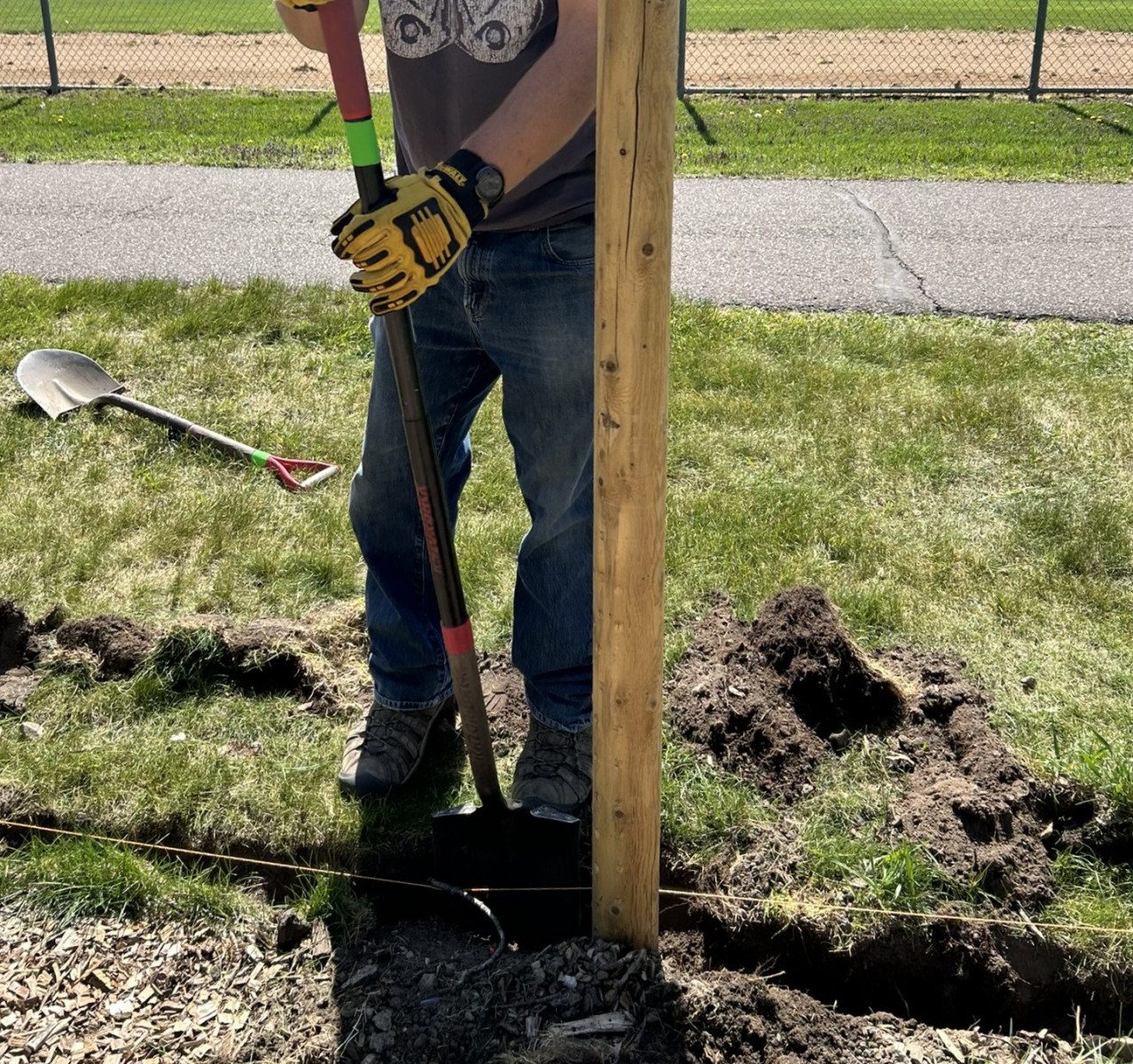
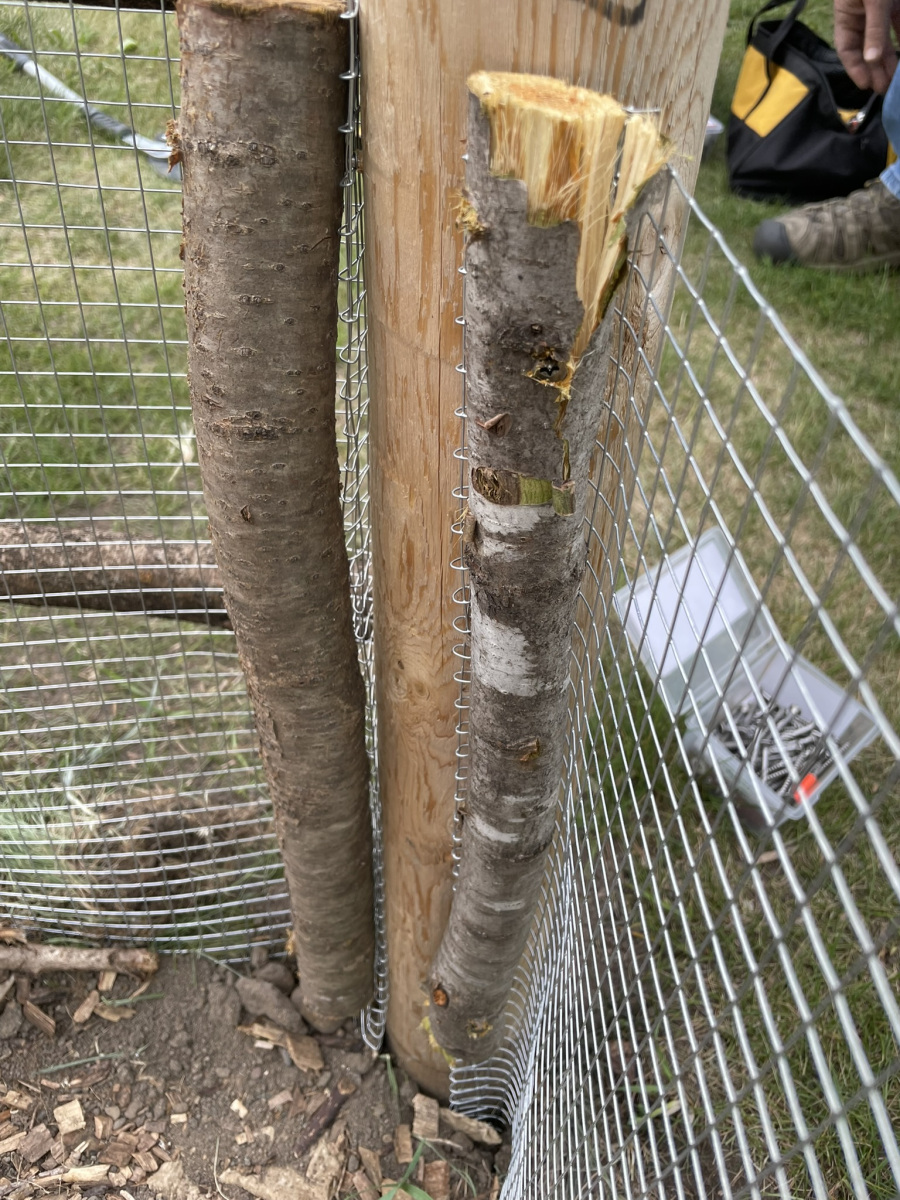
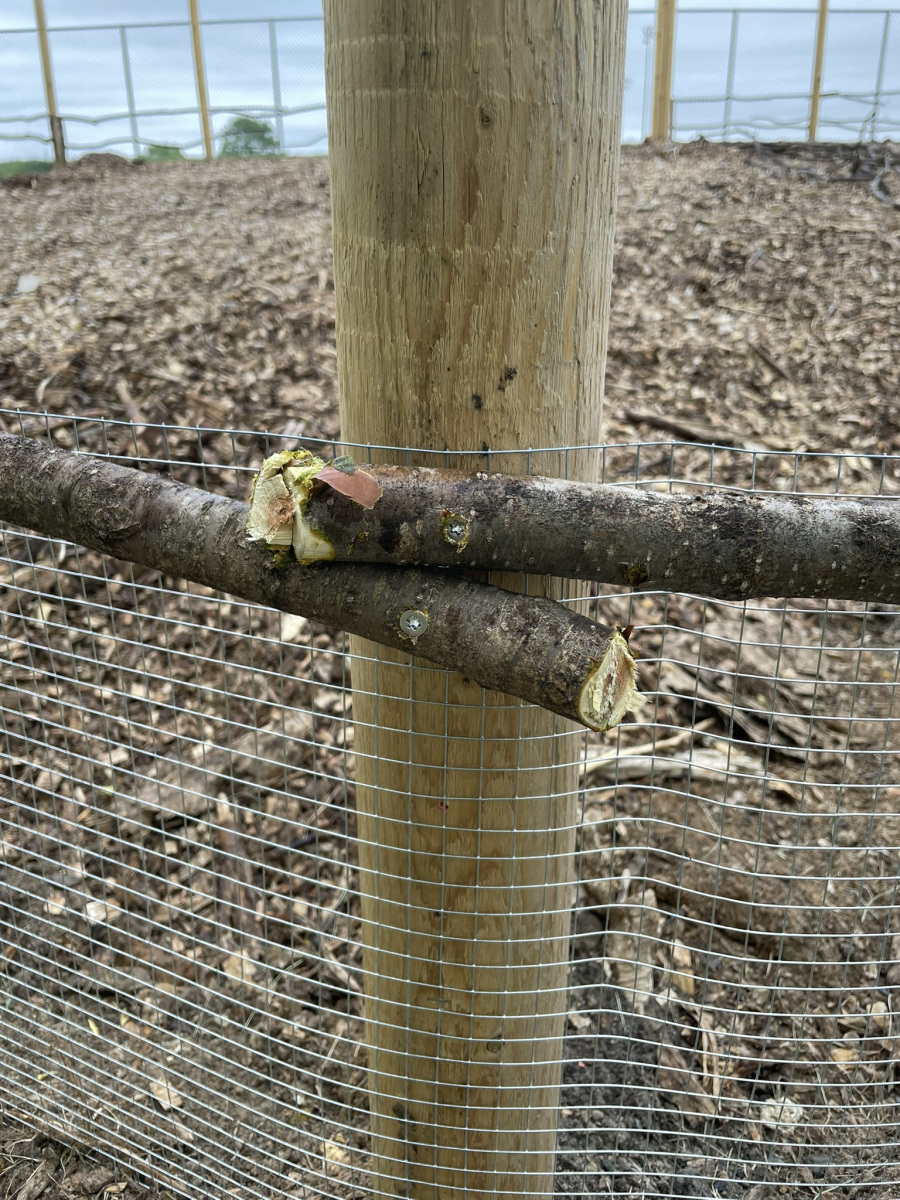
- Dig a 6-inch trench for a wire fence.
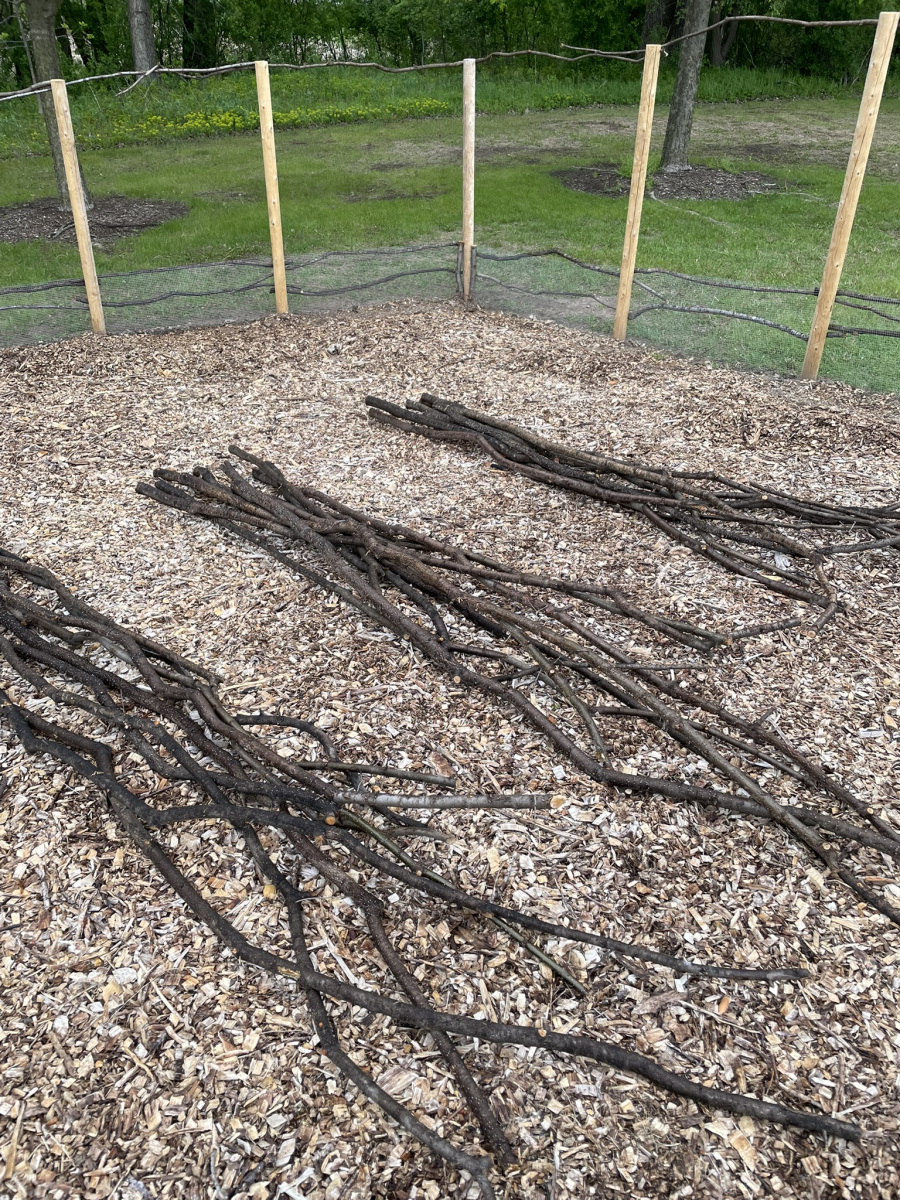
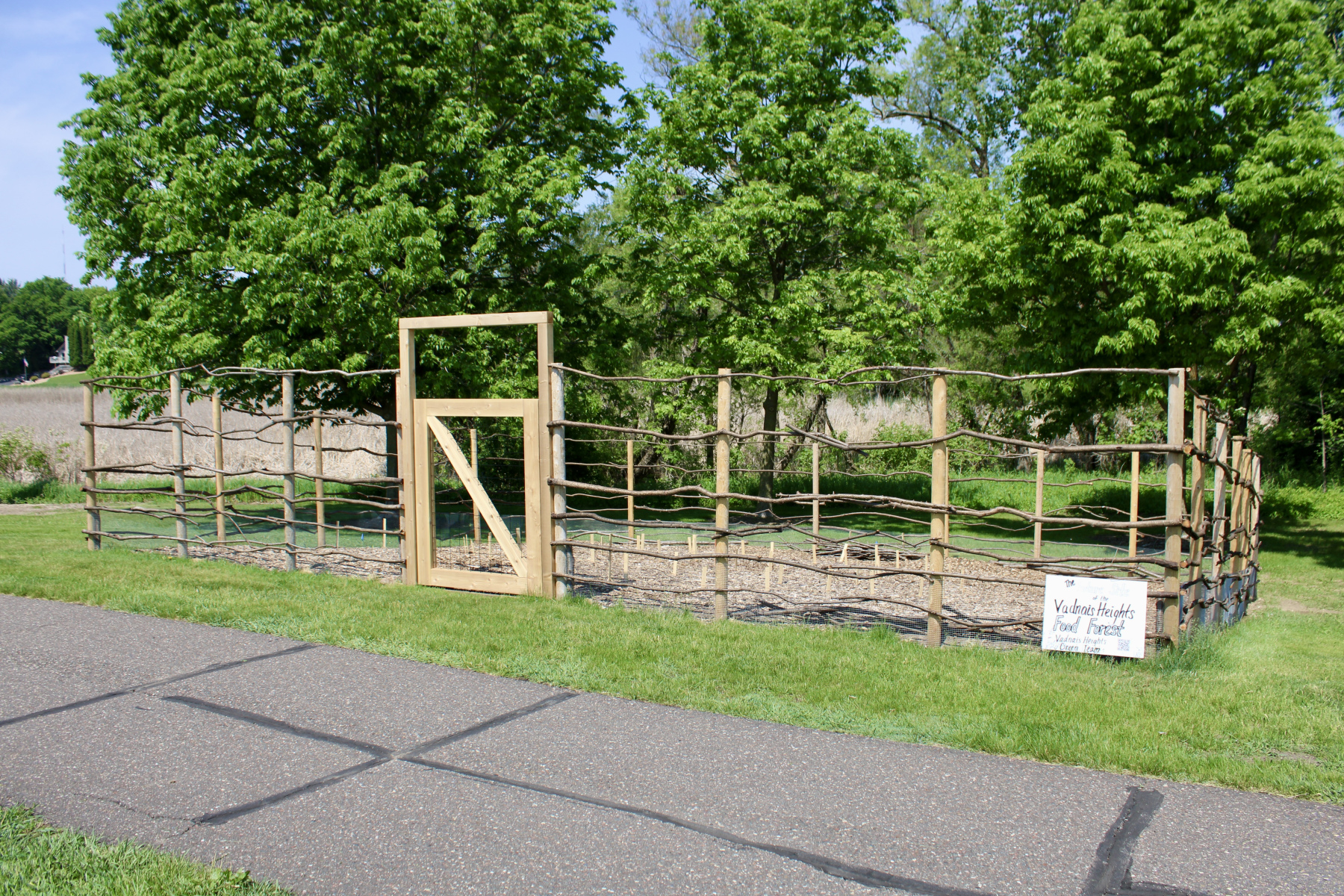
- Attach fence rails. (We used large buckthorn stems!) Secure with 2-3 inch stainless steel screws.
- Install a gate using hinges and a latch.
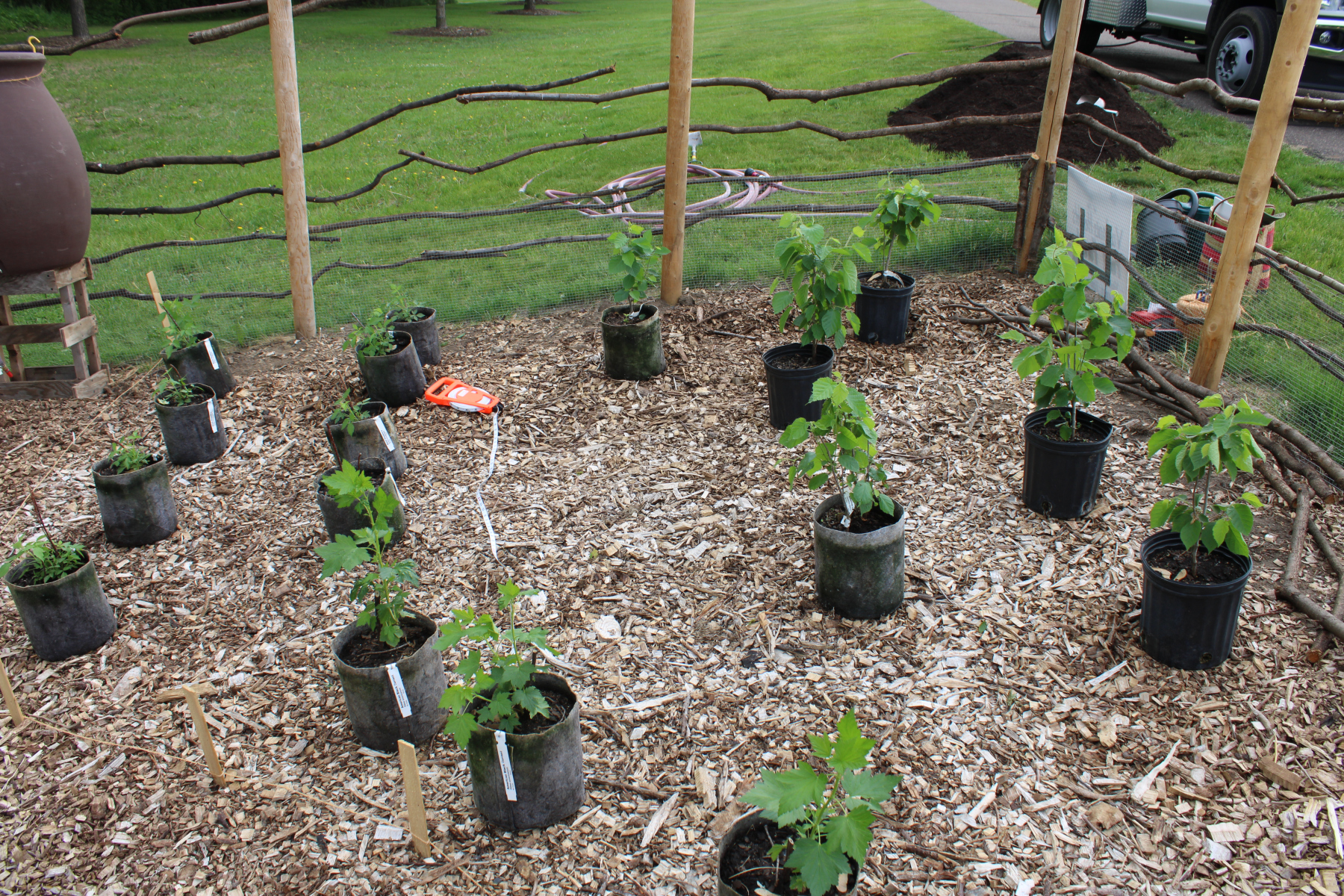
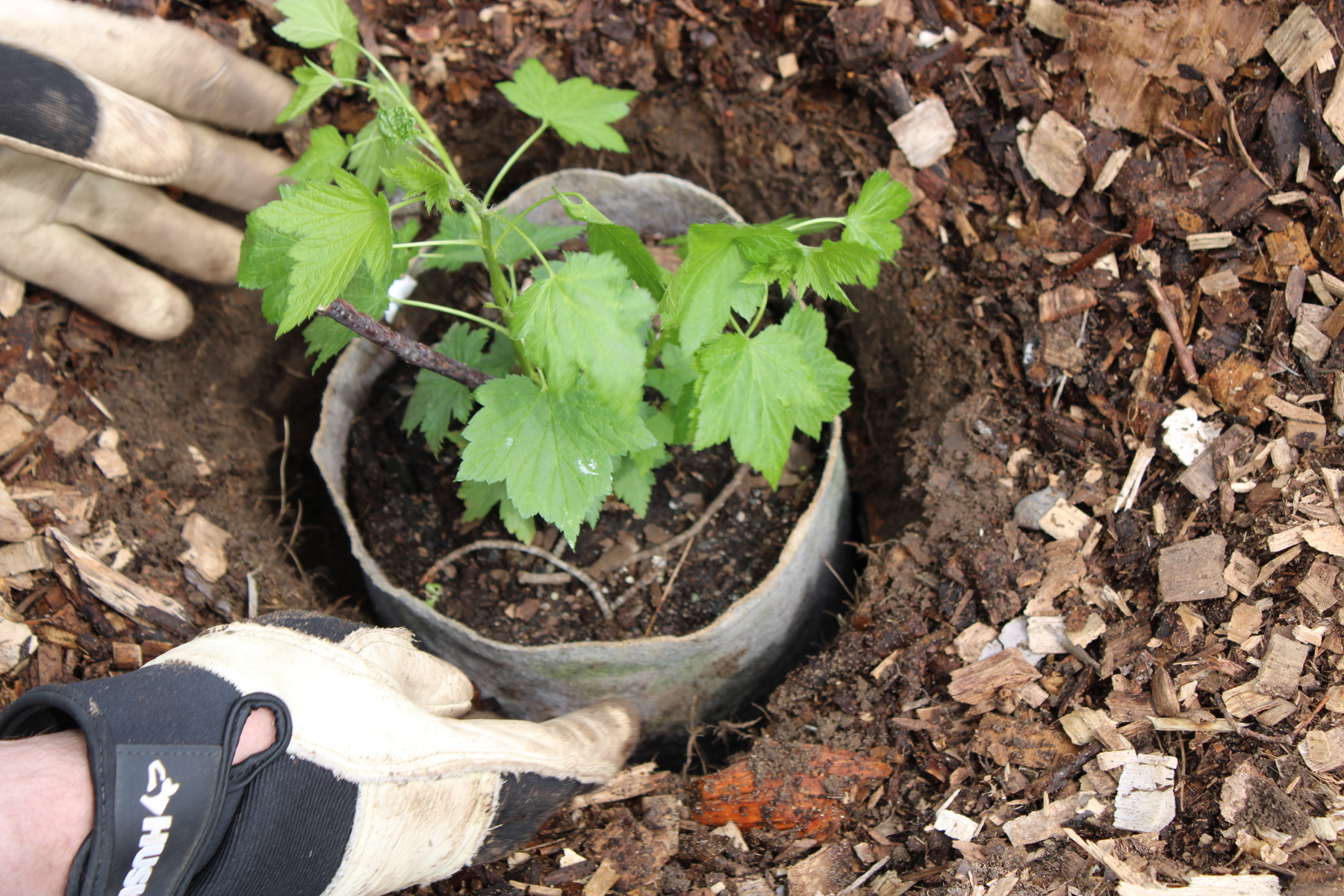
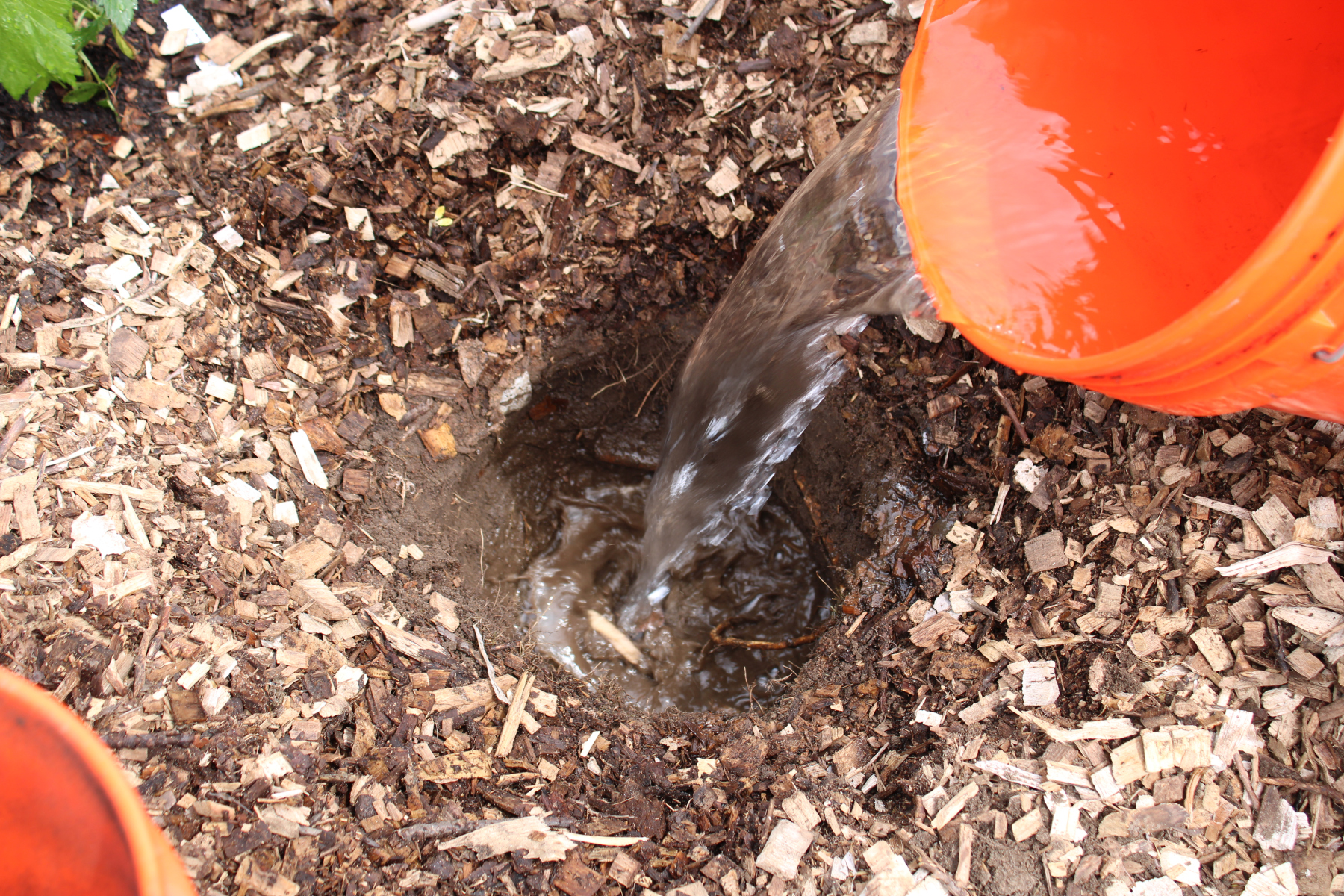
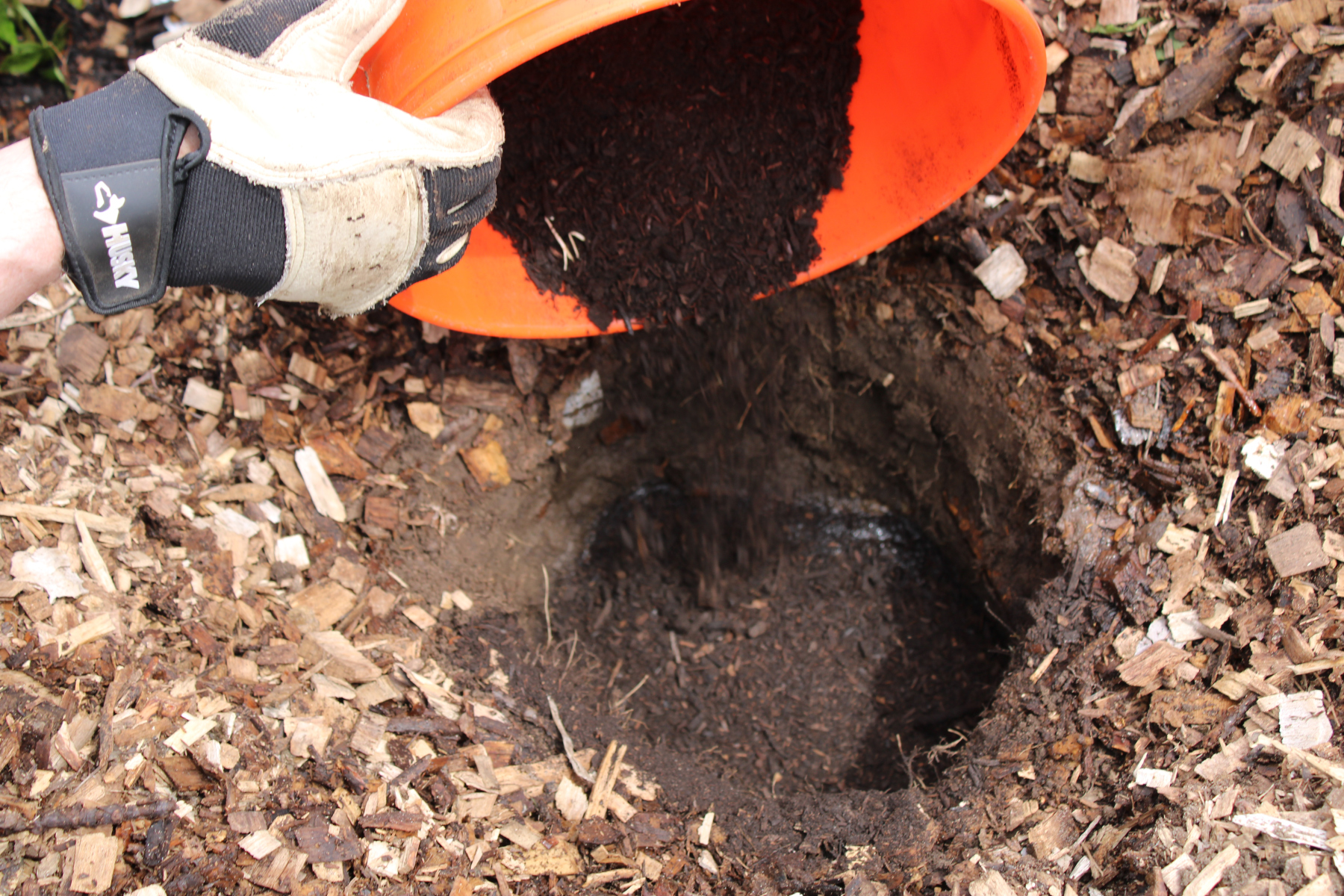
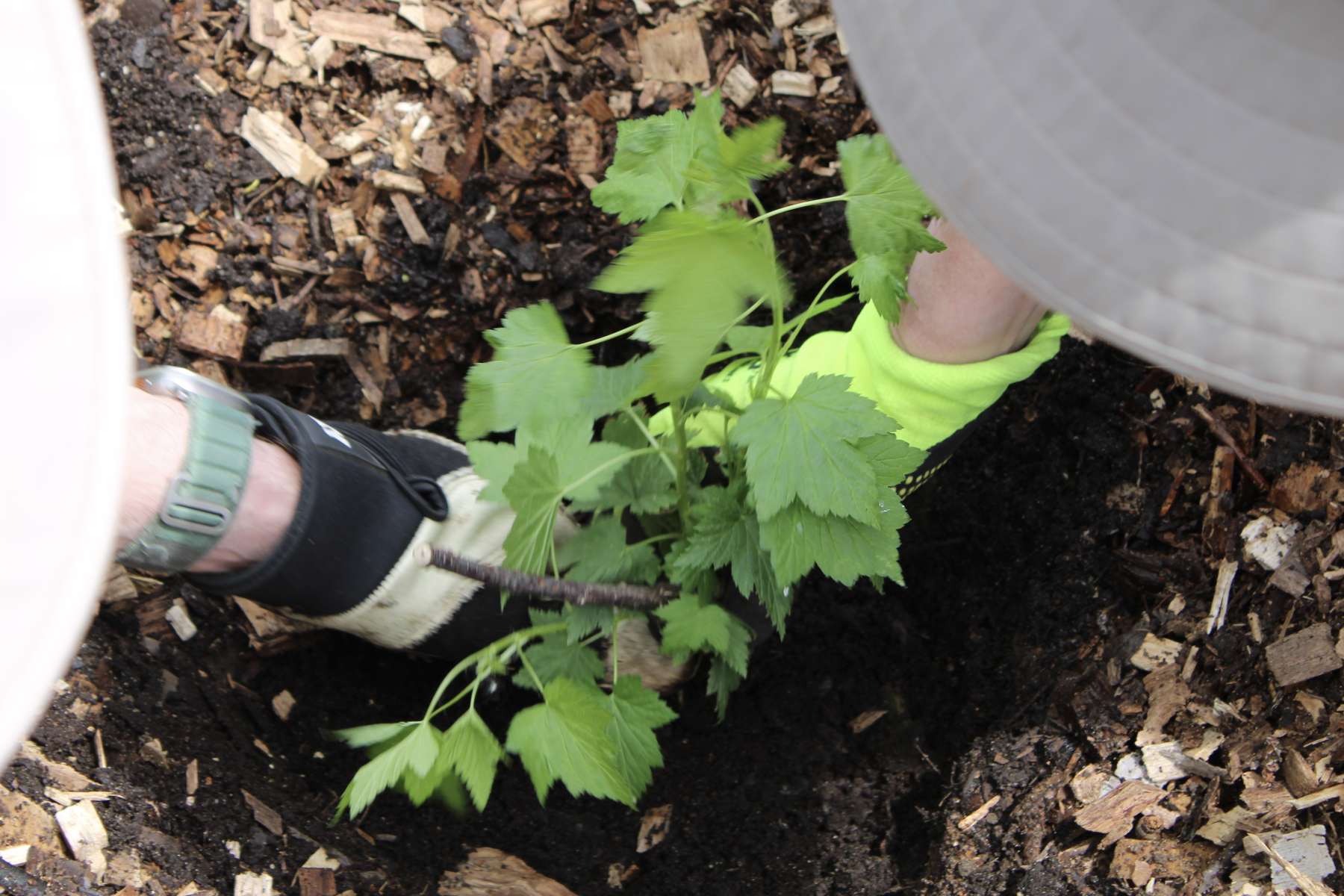
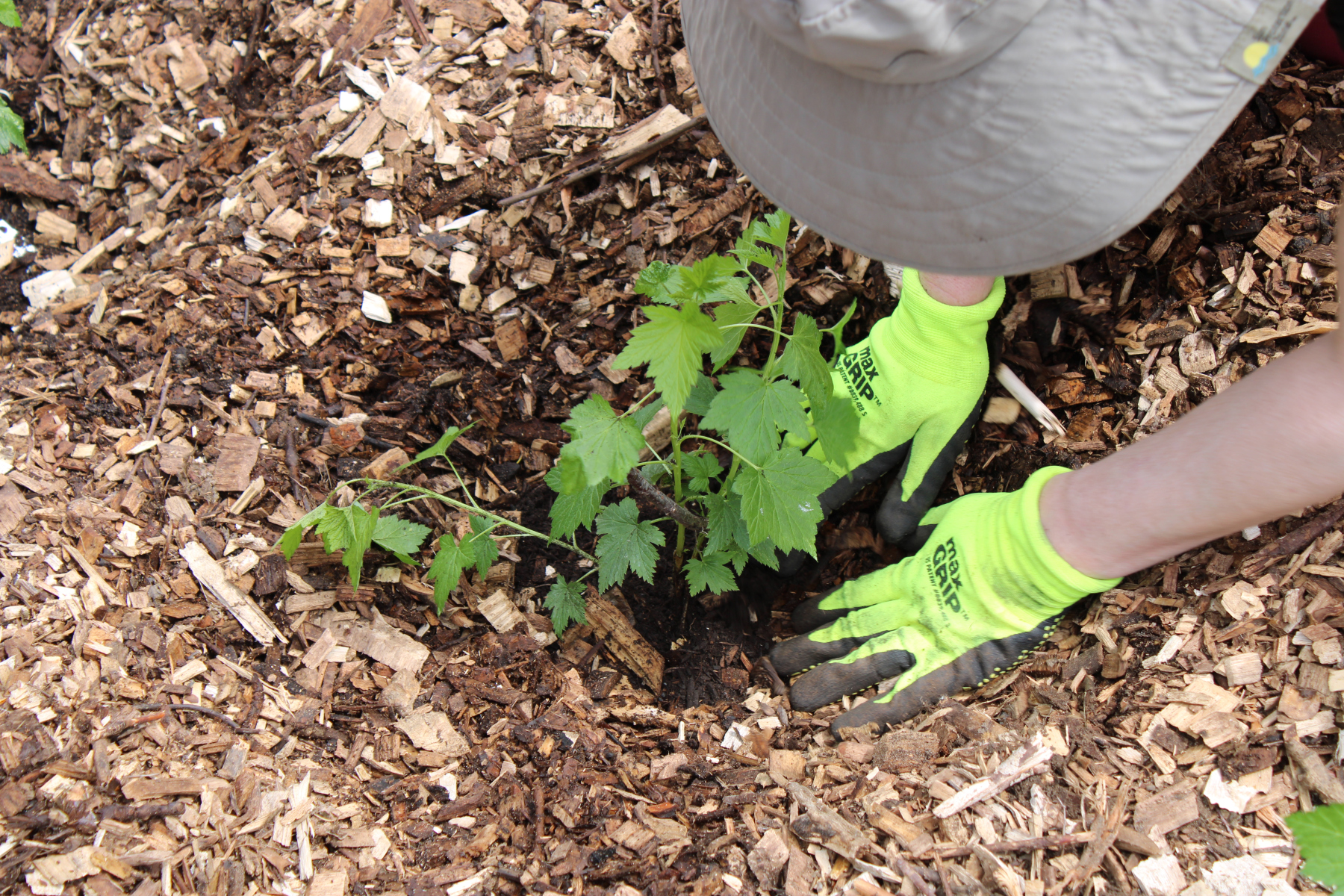
Planting!
- Dig a hole deeper than the plant pot.
- Add water to the hole, then combine compost with the original soil.
- Plant the root collar even with the ground and lightly press down the dirt.
To learn more, check out this video: Building Resilient Landscapes with Dan Jaffe Wilder
Foraging Recipes
Check out wild food tutorials, recipes and techniques from Chef Alan Bergo.
Vadnais Heights Community Garden Rules
- Leave no trace. Volunteers pick up any trash when leaving the garden.
- Chop-and-drop. During clean up drop in place any plant trimmings to feed the soil.
- No pesticides.
- Harvesting is only on scheduled days. This includes flowers, fruit, nuts, seeds, roots, etc.
- Harvest only what you need and when the produce is ripe.
- Stay on the designated paths as best as you can.
- Children must be supervised.
- No pets are allowed.
- No digging or destroying plants.
- No climbing the fence.
Frequently asked questions
Why should I use native plants?

Native plants are a foundational component of healthy ecosystems that provide essential food, shelter, and biodiversity that supports birds, pollinators, and wildlife. Their deep-root systems reduce the need for fertilizer, manage soil erosion, and require less water than non-native ornamental plants.
Check out the book Nature’s Best Hope by Doug Tallamy to learn more about conservation with native planting!
| ✘ Non-native | ✓ Native |
| – Low wildlife value – High water need – Needs fertilizer – Turf needs mowing – Have no natural predator and can quickly become invasive | – High wildlife value (right nutrients at critical times, habitat) – Low/no water beyond establishment – Does NOT need fertilizer – Does NOT need mowing – Can grow everywhere without harming the ecosystem – Over 2,500 species to choose from! |
What plants should I put in my Minnesota Native Foraging Food Forest?

Here are some plants to start with to create you own Native Food Forest!
Tree / shrub:
Serviceberry Amelandchier alnifolia – blooms early spring and has the most delicious berries in June. A keystone host plant for up to 120 species of butterflies!
American Hazelnut Corylus americana – easy to grow shrub. Edible nuts at the end of summer, and gorgeous fall color! An essential host plant for over 100 species.
Herbaceous layer:
Mountain mint Pycnanthemum virginianum – easy to grow, will spread but can be contained by dead heading before it goes to seed. Makes great tea, fresh or dried to enjoy all winter!
Wild strawberry Fragaria virginiana – soooo tasty, though smaller than cultiver strawberries. Excellent ground cover, blooms in spring for early pollinators. Easy to propogate, so one plant will make many.
Prairie onion Allium stellatum – much like onions in the veggie garden. Greens are edible before the flower forms, bulbs are ready to harvest in the autumn. High value nectar & pollen source in late fall.
Check back later for our full Minnesota native edible plant list (coming soon!).
Where can I purchase Minnesota Native Plants?
Check out these nurseries with Minnesota Native plants!
How do I protect my garden from critters?
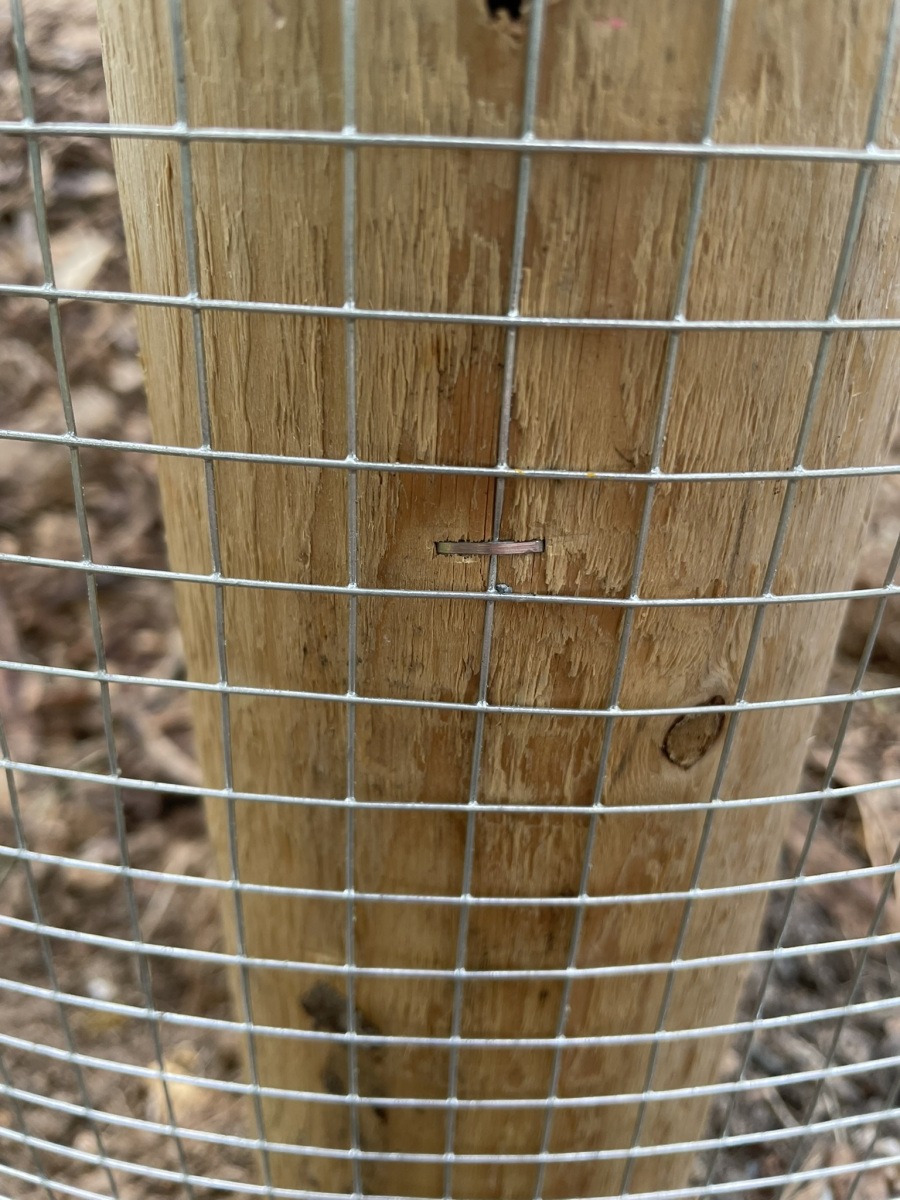
Before planting your garden, establish a fence at least 6-8 ft tall for deer, reinforced with a shorter fence that is 2 ft tall and buried at least 6 inches made of rabbit-proof material such as chicken wire, or hardware cloth. Learn how to turn buckthorn branches into a fence in the “How do I build a Minnesota Native Food Forest in my Garden?” section above.
Where else can I learn about food forests?
The University of Minnesota Extension is also a helpful resource!
Can I forage in the wild?
Yes! Make sure to check the Minnesota Foraging Laws before you go!
How do I get involved in the Vadnais Heights community Native Plant Food Forest?
Come to one of the events listed above, send us an email or sign up for our newsletter!